English
 French
 German
 Spanish
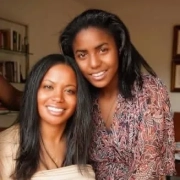
Between Nolan Wells and the Nikole Hannah-Jones story, the realities of raising Black children in an antiblack country hit very close to home. I am sharing Maia’s story, in her words and in mine.
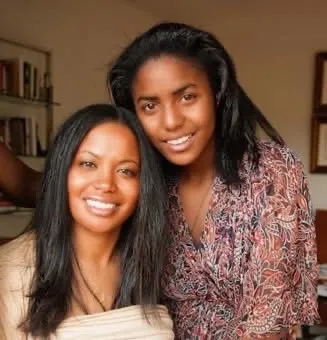
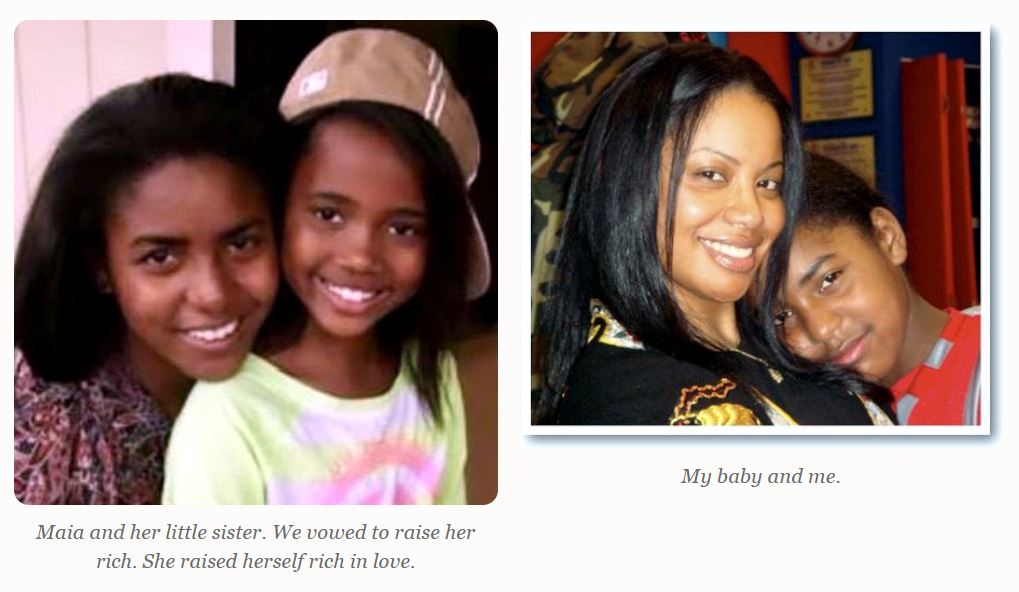
Me and my baby.
Between Nolan Wells and the Nikole Hannah-Jones story, the realities of raising Black children in an antiblack country hit very close to home. Nolan, an eighteen year old student athlete, found dead on a Mississippi shore. And the battle of educating Black children.
If you missed it, Hannah-Jones spent last week’s New York Times Magazine asking if she betrayed her own daughter by sending her to an underresourced, segregated school on principle. Ten years ago Najya was on the cover in Afro puffs. Now she is sixteen, and she told her mother, “I never really got the education I wanted.”
The internet has been loud about it all week, and these are the voices that resonated with me. Dr. Amber Thornton wrote that her school choices for her children are shaped by a fear her white friends never have to carry. Dr. Raquel Martin asked, “how do we teach Black children collective responsibility without teaching them that advocating for themselves is somehow in conflict with caring for their community?” Essence editor Bridgette Bartlett Royall wrote about the invisible labor of navigating education as a Black parent, the researching, the questioning, the advocating. The work of preparing Black children for the realities of this world while protecting their childhood and joy. And Sonja Sohn with “It’s lonely on the frontlines of change,” thanking Hannah-Jones and her family for the immense sacrifice they offered. I too thank the Hannah-Jones family and praise them for sharing, because I know that fear, that loneliness, the sacrifice.
Everyone is debating what Hannah-Jones got wrong. I found the biggest blessing in Najya having a family that listened, paused, named the issue, and began restoration and building from the experience. The family collaborated and co-created Najya’s high school experience, with a mature Najya leading.
As I’ve mentioned, I’m writing a memoir in the spirit of Ta-Nehisi Coates’ Between the World and Me, his memoir to his living son in the form of a letter. Mine is a letter to my daughter, Maia, who is an ancestor: an apology and a thank you for her beautiful life. Part is apologizing for and naming the racist American systems she was born into. James Baldwin wrote his letter to a nephew at the start of his life. Coates wrote to a son in the middle of his. I am writing to my daughter in the afterlife.
the untold story of the African American who grows up with wealth, privilege and racism
Maia, from her NYU application
The thank you begins with the privilege and the breadth of choices that raising Maia afforded me. Armed with that experience, as a family we no longer falsely romanticized the “best private schools” or underestimated the underresourced. And with her younger sister, Monique, we took a completely different route.
We took a completely different route. A French education.
A French education: it started at the Renaissance school in Oakland, where French was paired with Montessori. Then full immersion for K through 3 at Audubon Charter in New Orleans, and Ecole Bilingue de Berkeley when we came back to the bay for fourth through eighth. For high school we chose Bentley in Lafayette. It was her first time learning in English, and it lasted only a year, because although she was thriving academically, she started to feel the microaggressions. After the school failed to ensure a healthy environment, Monique demanded a change. We too co-created the rest of high school, with Monique leading. That fall she began her sophomore year at Berkeley High and this past summer, with hopes of taking the language to Africa and beyond and following in Maia’s footsteps, Monique lived and studied French at the Sorbonne in Paris. She just entered her junior year and is preparing for the AP French exam.
For the memoir my writing coach, Simone, gave me the picture I hold and often revisit as I write the letter: me braiding Maia’s hair, telling her the story: apologizing, witnessing, testifying, and thanking her.
And although our fight might have seemed unsuccessful, Maia’s sacrifice is compounding the way wealth is supposed to, but with love: interest on interest, generation on generation, paying out through her siblings.
Maia’s sacrifice is compounding the way wealth is supposed to, but with love: interest on interest, generation on generation, paying out through her siblings.
The vow
At four months old Maia graced the same Madison Square Garden stage as her dad for the 1996 NFL draft. He was named the number 1 pick to the New York Jets.
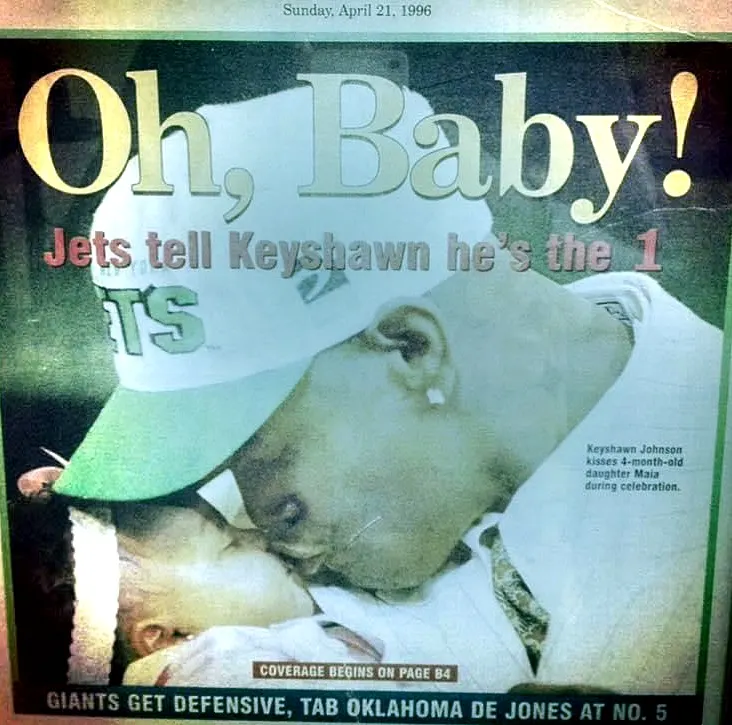
The front page, Sunday, April 21, 1996. Oh, Baby. Her dad kisses four month old Maia as the Jets make him the first pick.
We were young parents. I was a freshman, and Keyshawn had just transferred from West LA Junior College the year before too, when we realized I was pregnant. USC had become my home just six months earlier, now I had to face my parents with the news. We flew to the bay, Keyshawn met my parents for the first time, looked them in the eye, and made them two promises: that we would get married and that I would graduate from USC, debt free.
He eventually kept both promises, and when Maia was born, Keyshawn was 23, I was 19. I made it back to USC for sophomore year and was navigating motherhood, catching up with my studies, plus grappling with the extra weight from the pregnancy and the pressures of Los Angeles beauty standards. For school, Keyshawn’s mom Gwen was my saving grace, always there for me and Maia. I was free to go to class as long as I wanted. Every morning Gwen and Keyshawn’s brother, Dennis, would make the drive from Sherman Oaks to our Westwood condo to pick Maia up. And navigating everything was tough. I was a young mom, a Berkeley girl, in a strained, unfaithful relationship. And for me, relying on my natural beauty was always enough. But the cheating was embarrassing, humiliating. Maybe my natural beauty was not enough, I often questioned. Cheating is not what I signed up for, and every time I confronted Keyshawn he had an excuse, a lie, ending with him begging, often crying, asking to come back.
There were already so many other women, then came the newfound wealth and fame, and even more women. But now they were prettier, smart like me, and celebrities too. The first celebrity I found out about was “Sunshine” from Harlem Nights, the beautiful woman from Boomerang and Waiting to Exhale. His relationship with a tennis star lasted beyond our marriage. That affair happened even with my name in bold on my Robertson Boulevard storefront, my namesake boutique, Shikiri. I even unknowingly sold Honey Child, a brand by a woman he was cheating with, at my boutique. I didn’t even like the brand, but I bought it in solidarity because she also was an athlete’s wife, a basketball wife. I saw us as sisters. She did not. And even after spending a long, fun day in Vegas with the star of Desperate Housewives, I later found out that the two of them had an affair too. And it didn’t stop there. Even my “friends” wanted a part of him, on and off campus, from Beverly Hills to South Central, with Keyshawn gaslighting me and actively participating along the way. All while I was at home raising our daughter and studying, with him constantly reminding me, “I pay the cost to be the boss!”
Gaslighting me and actively participating along the way.
With Maia, we agreed on how to raise her. Give her everything we did not, especially materially. This was before NIL. The kids pulling up to campus in the latest Porsche 911s, at our school accurately nicknamed the university of spoiled children, were the ones cheering for us. But unlike them, when times got tough, we leaned on boosters and agents to make ends meet, not our parents.
“Soon paparazzi will be following you around Chanel on Rodeo, watching you spend,” Keyshawn often dreamed aloud. At USC and in LA we could see the wealth very loudly, almost taste it. But sitting in our student housing, driving around in our beat up old Honda Accord, we could never quite experience or feel it.
Maia was our opportunity to bask in the wealth we had vividly dreamt about. So we vowed to give our daughter the privilege we desperately wanted ourselves: wealth privilege.
Maia was our opportunity to bask in the wealth we had vividly dreamt about. So we vowed to give our daughter the privilege we desperately wanted ourselves: wealth privilege.
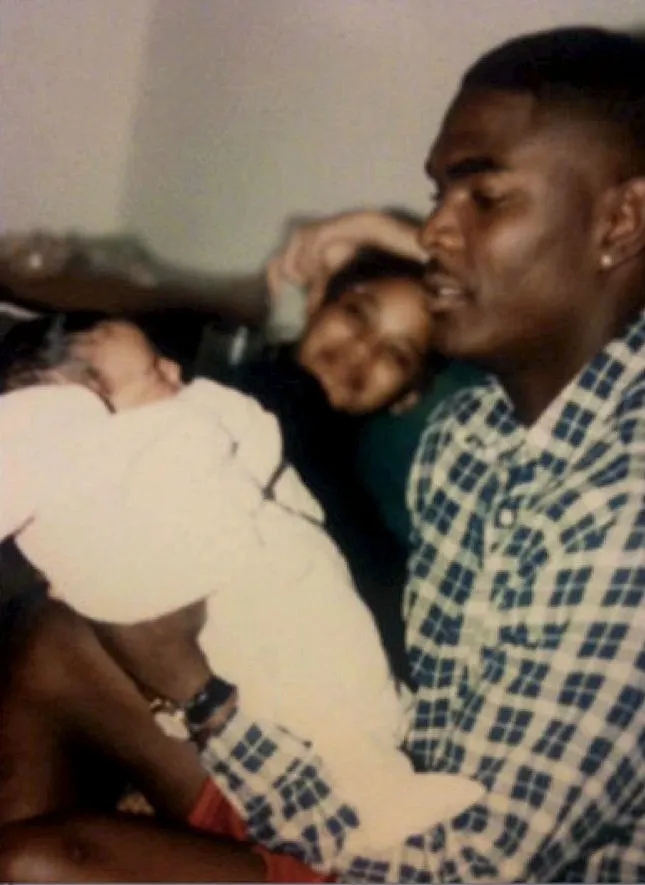
USC days. Young parents, baby Maia asleep on her dad’s arm.
Even though I had never felt more betrayed and disgraced, everyone kept saying how lucky I was. And on February 14, 1998, six months pregnant with our second child, and Maia as the flower girl, we wed at the Beverly Hills Presbyterian Church, with the reception down the street in the Crystal Ballroom of the famed Beverly Hills Hotel. His earlier promise came true too, the paparazzi were following us.
I did not stay innocent either. I also had an affair or two, including one that lasted over two years with a man who, as bizarre as it sounds, was the soft teddy bear I needed. And after years of being with a South Central guy, the pivot to Compton was easy. How he came into my life was Keyshawn too. Keyshawn would apparently sneak to his high school sweetheart’s condo down the street from ours, also on the Wilshire Corridor. Not to say my teddy bear was not into me, or did not fall in love, but I found out. Our relationship began in retaliation.
Maia’s alter ego, and truly how she lived: a rich Jewish boy. Her first school was on Long Island, we lived in Woodbury, near where the Jets practiced, Hofstra University. At Miss Sue’s and nearly every school up until middle school, there was a big Jewish presence. Maia grew up celebrating Hanukkah, going to their bat mitzvahs, deep in those friendships. Maia was empathetic, able to find the best in people, found a way to relate and get along with everyone, but certainly lived her life with a nonchalant gusto, a “fuck you, my rich daddy will sue you and I can make my own money because I’m smart too,” attitude.
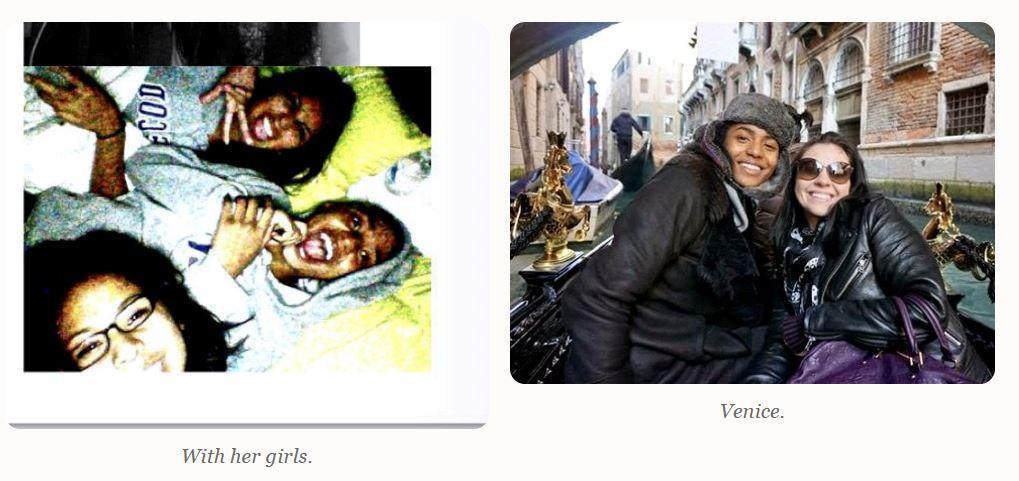
Antiblackness does not require intent. It lives in the circumstance.
I’ll save the details and family court for the memoir. But with the school system, my research keeps pointing to the antiblackness she endured. And to be honest, I don’t think anyone set out to be unfair to Maia, especially with our wealth and her father’s fame, yet they were. Especially compared to her very privileged, very white peers. Maia’s mistakes were always seen faster, named louder, punished a lot harder and significantly more severely than others.
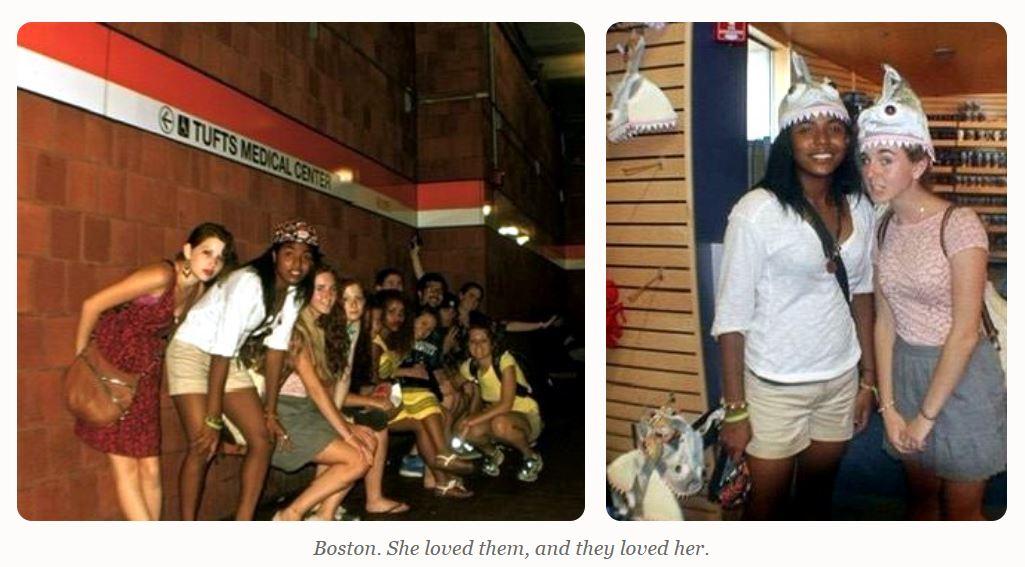
Antiblackness does not require intent. It lives in the circumstance. It decides what gets noticed, what gets escalated, whose judgment is assumed. It decides who gets accepted to schools, allowed to break the rules, and who gets expelled. Antiblackness was invisible to almost everyone, or at least perceived that way, sometimes even me. But we certainly did not imagine it. The antiblackness was there, even for Maia’s wins. They went the complete opposite direction. Diminished, or not mentioned at all, and then copied. That is white supremacy in action.
Maia’s mistakes were always seen faster, named louder, punished a lot harder and significantly more severely than others.
Keyshawn and I ignorantly bought into the dream that our wealth would shield Maia from the realities of racism. We even thought wealth would camouflage our family dysfunction. Academically, we enrolled them in the best everything. The best schools, the best camps, Lindamood Bell, Kumon, tutors for every subject. Maia studying French in Guadeloupe. But our wealth could not protect her from the racist system or our trauma. On the outside, the facade stuck, but ten ugly, dark years of spending birthdays, summers, our time and our money in court, severely impacted Maia and Keyshawn Jr.
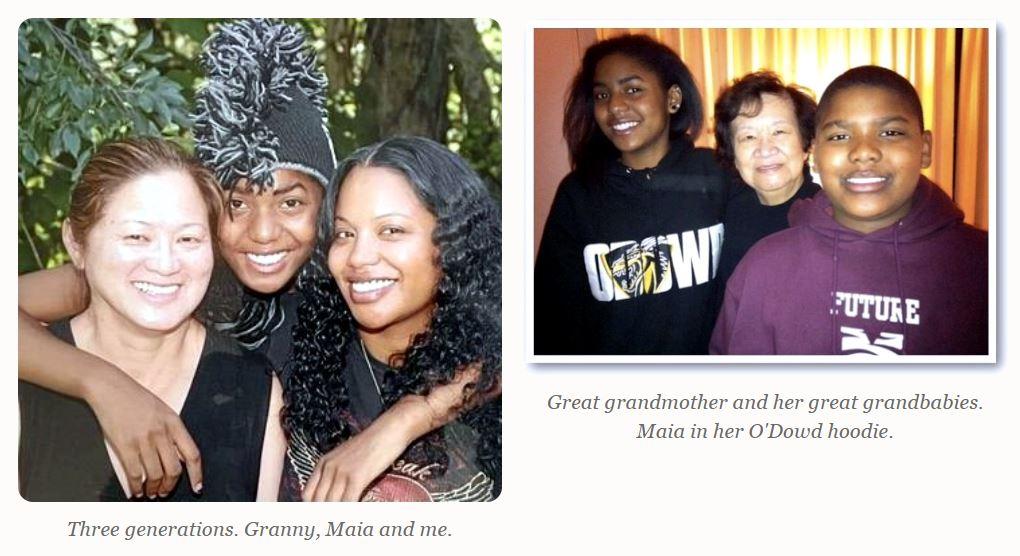
The record, in her own hand
Maia’s senior year, four months before graduation, Hyde School sent her home and would not let her come back. Hyde is a boarding school that sells itself on character. And my daughter made the kind of mistake teenagers make, the kind a white classmate made right beside her. This July, those same girls were successful in having their wrongs heard.
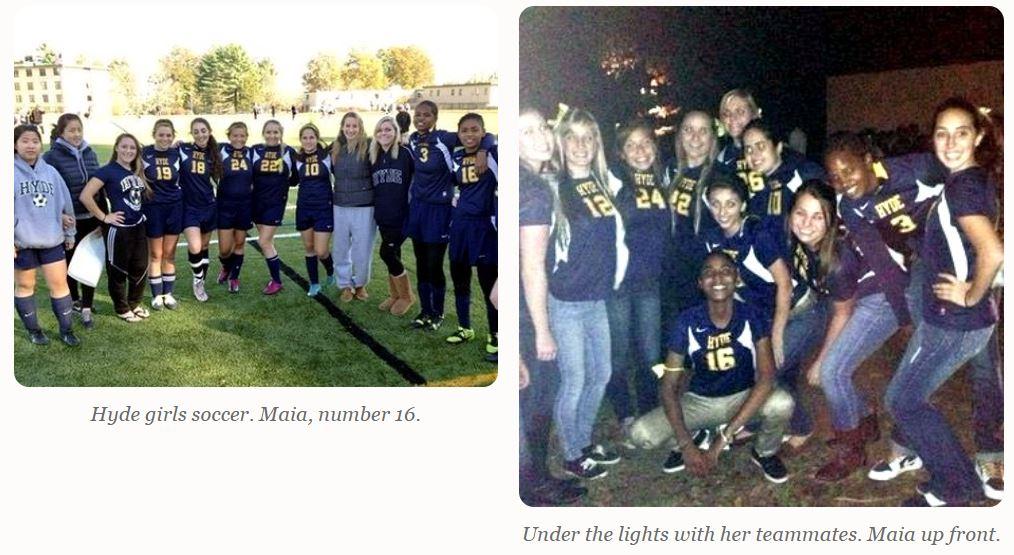
Her classmates now have the privilege of telling their story, and I love that for them. The whole barbaric industry is finally being dragged into the light. Paris Hilton fought to shut these very programs down, and Netflix told an eerily similar story in The Program. That school gave my daughter a language for blaming herself and called it character.
Maia does not get to tell her story. If she were alive, I am sure she would be part of this lawsuit.
Every school year the courts would decide where they thought we should live.
She named this story first
From Maia’s application to the New York University Tisch School of the Arts:
My goal is to attend New York University at the New York City campus because of the standards of affirmative action, equal opportunity and diversity– all rights I stand for and believe in. I also appreciate how NYU is integrated into the culture and community of New York. It is my goal to study at the Tish School in the Film and Television Program. I want to follow my passion of creation of film and tell the untold story of the African American who grows up with wealth, privilege and racism.
Explanation of Transcript:
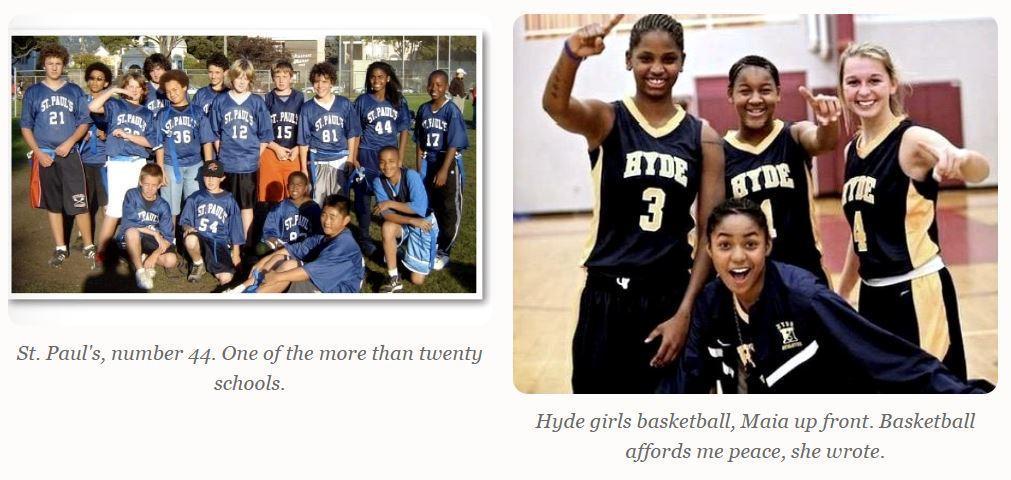
In my 18 years, I have lived in six states and attended over 20 schools. During my high school years, I’ve lived in three states and attended four different high schools, finally finding my place at The Hyde School, a character focused college prep high school. My consistent moving trend began because my dad played in the N.F.L. for 12 years and continued because of my parents ongoing child custody battle. After my parents divorced, they could not collaboratively make decisions regarding my brother and I. Every school year the courts would decide where they thought we should live.
Every school year the courts would decide where they thought we should live. Najya’s mother chose her daughter’s school on principle, and ten years later she got to say it to a living girl: “I feel like you got cheated. And I’m sorry for that.” I read that apology the way my sister Sonja read the whole essay. Not as a failure to judge but as an example to honor.
A mother on the frontlines of change, facing her child and telling the truth. My daughter’s schools were chosen in courtrooms, and my apology is the memoir. Thank you, Hannah-Jones, for showing me how to say it.
The memoir is an apology and a thank you. Because of Maia we did not romanticize private and we did not underestimate underresourced.
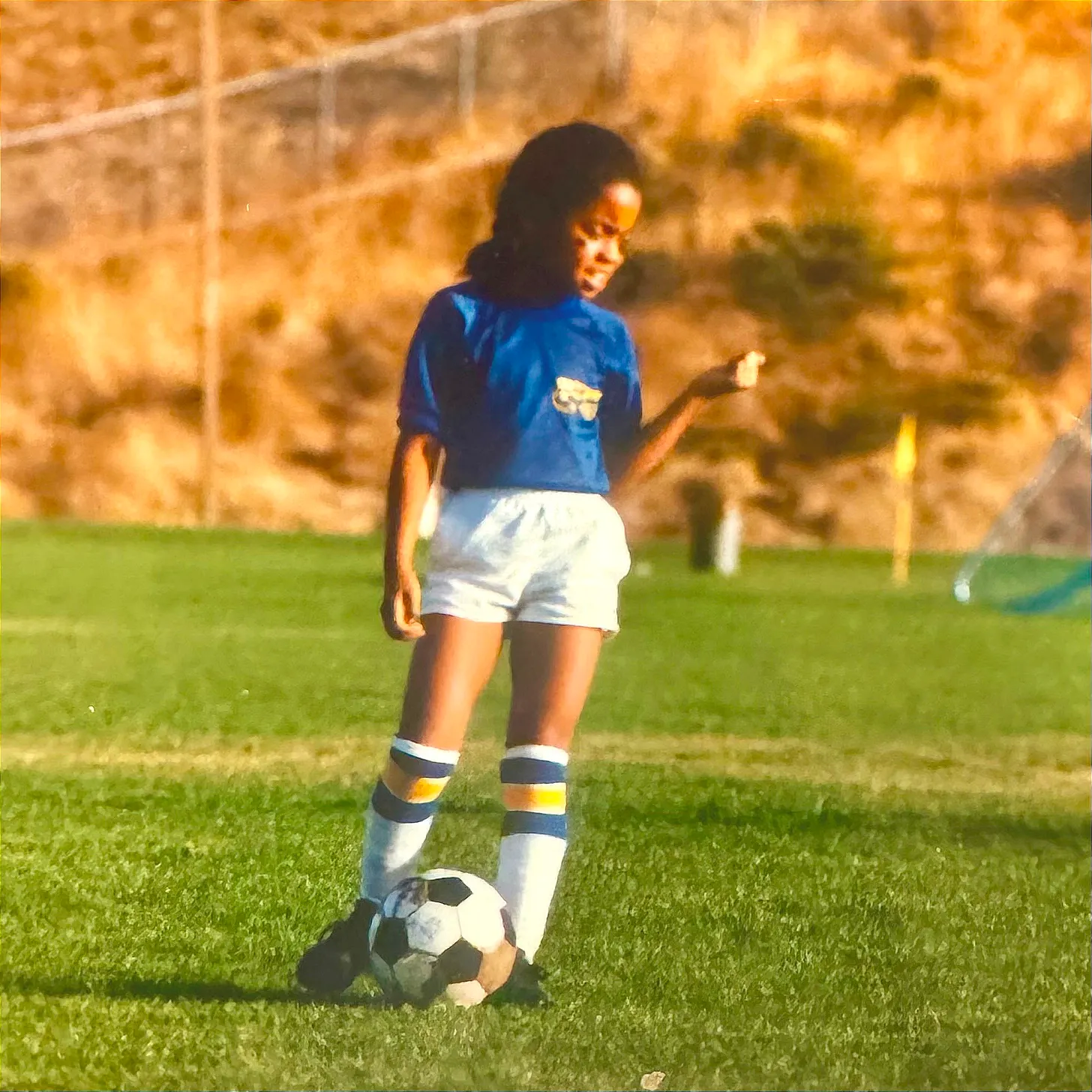
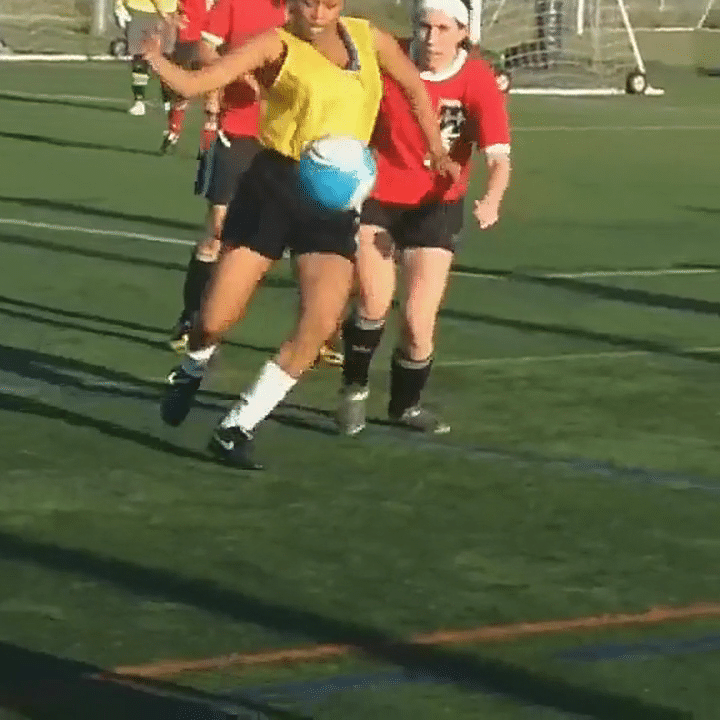
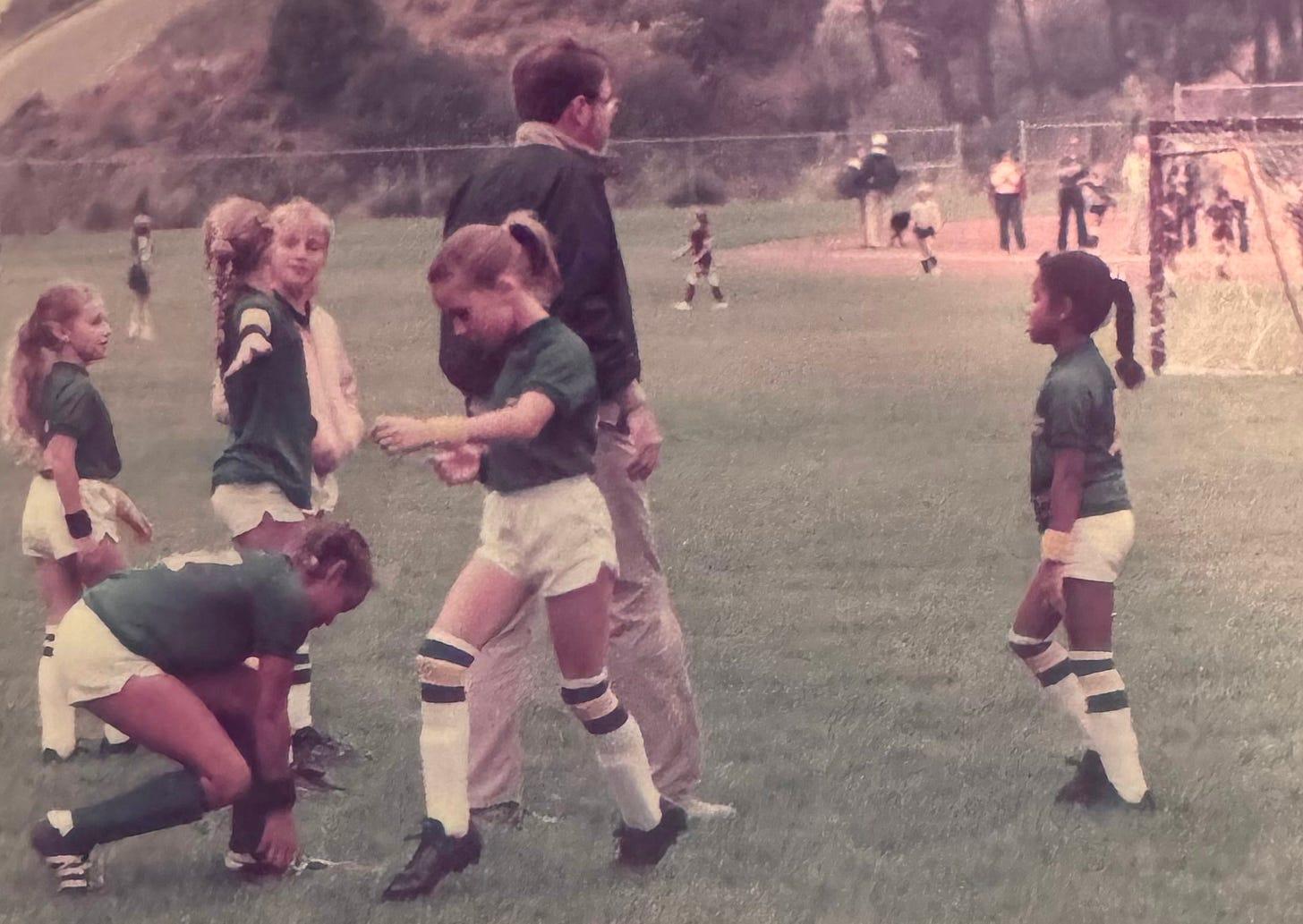
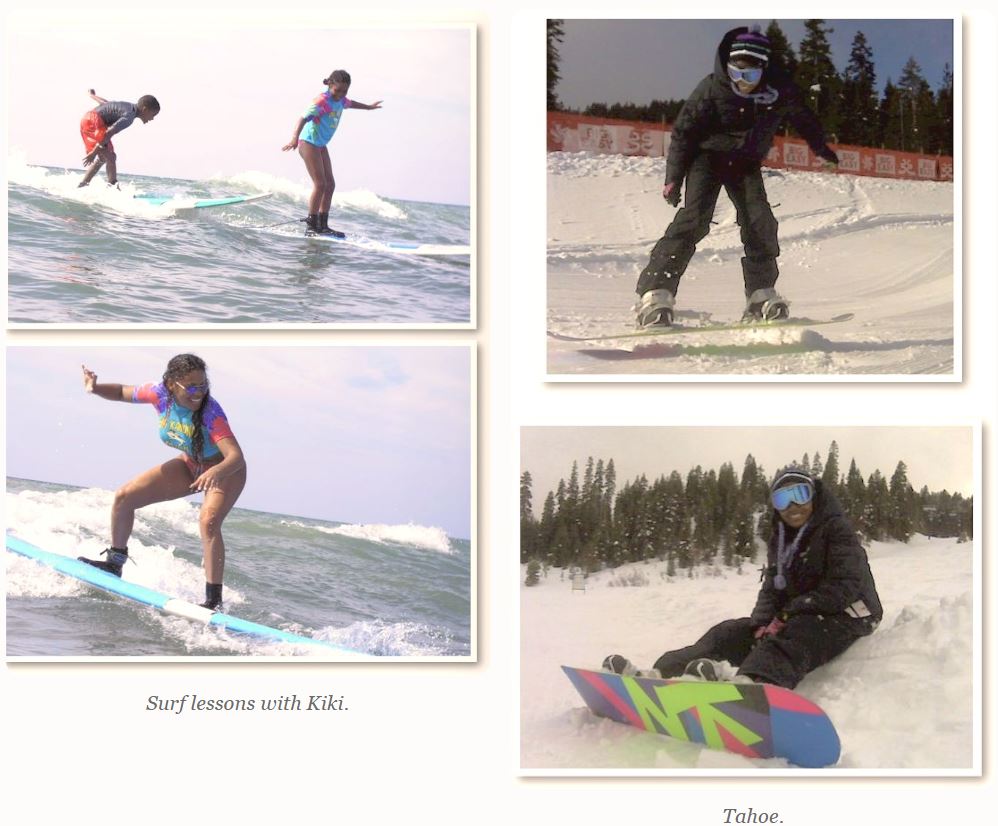
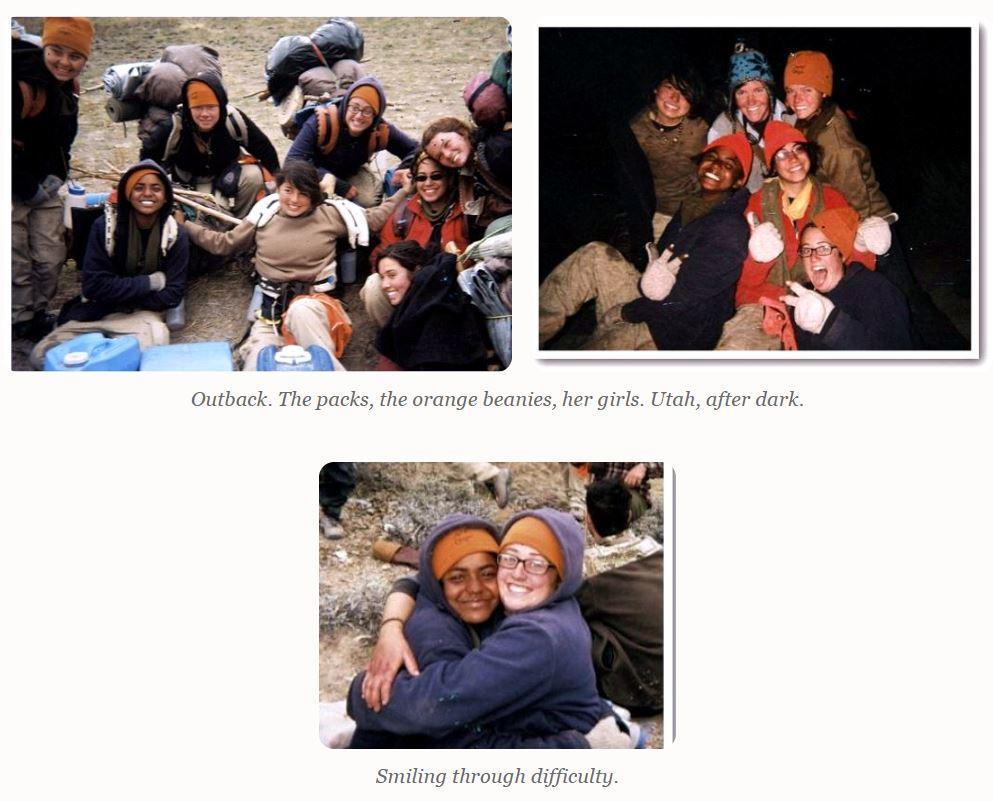
What follows is Maia, in her own beautiful writing. The poem she wrote at fifteen, and the essay about the night they took her to the wilderness. There are photos too. Maia, always smiling through difficulty.
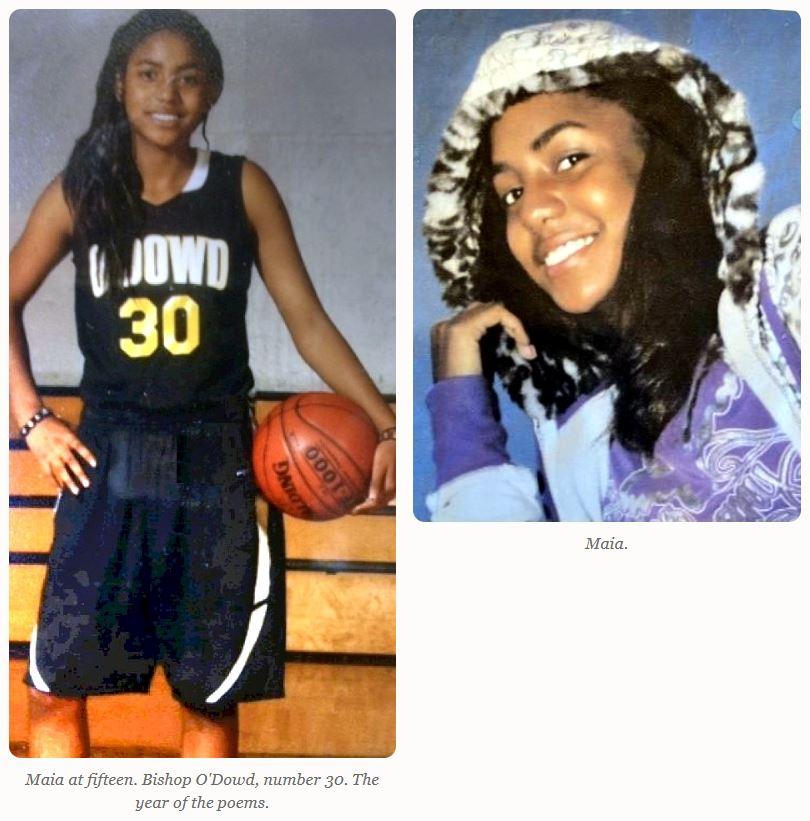
Maia’s poetry: Live in Reality
Getting lost
Then finding yourself again
Scared out of your mind
On the verge of tears
Just because you wanted to have a little fun
Well you had it but you were so lost
No one could find you
Wandering around
In your own reality
When you going to stop kid?
Stop this?
Be good already, and live in reality
You worry everyone
Me the most
I love you like nothing else
And when you do stupid stuff like this
I cant sleep
Or think about anything else
I hope you enjoy yourself
If thats what you really want
But
Just know
I personally hope after losing yourself
That bad
You can find yourself again
I hope nothing bad happens to you either
Because if anything did,
Thats my life just as well
Don’t forget it
You are me
and
I am you
….
Live reality.
Maia’s essay: Digging A Shithole
“Get up!”
“Leave me the hell alone, I’m not movin.”
“Then I’ll pick you up.”
“If you touch me I’ll scream!”
“I don’t care.”
“I’ll hit you and bite!”
“Then I’ll have to hand cuff you.”
“Screw this, I’ll get up. I’m sure it’s better than being here.”
September 23rd 3:30am, 2011. All of a sudden a man and woman that I had never seen walked in my room with my dad, who said something about a wilderness program. I felt a lump in my throat and my eyes started to fill with tears. I started to have flashbacks of all those nights that probably led my parents to make this decision. Coming and leaving home whenever I wanted, not telling them where I was going, not answering the phone, skipping the rare family occasions we had, the list goes on.. I start to go back to actual time hearing “get up, its time to go!” I wouldn’t budge when they said it was time to go, the unfamiliar man and women in my room were called “transporters”. Finally I said “whatever,” and just went with my regular attitude that nothing ever bothered me and left the house. But in my heart I wanted to run as fast I could to escape the situation. As we were driving to the airport we were in complete silence, I just stared out the window. In my mind I was thinking, “just wake up, its nothing, there’s absolutely no way this is happening.”
They asked me if I wanted to call my mom. I did. “Mom, I don’t understand what’s going on.” “I’m sorry, Maia but it’s for your own good. It will make you better! Bye, my precious, I love you.” “Whatever, bye” “You’re not going to say I love you too?” “How could you do this to me?,” and hung up the phone.
I really do regret that because that was the last thing I said to my mom for three months.
I asked the transporters, “so where is this damn wilderness place?”
“It is about 2 hours away from Salt Lake, Utah”.
I sat there thinking ‘where the hell is Utah?!’ What I knew about the place was limited. A garbage basketball team that used to be good. Great snowboarding. Mormons. I realized I didn’t really know anything about this place.
We stop to get donuts, but I’m not hungry. I feel a burning acid drip slowly in my stomach that makes me want to vomit. At five o’clock in the morning, we finally arrive at the airport, and board the plane at six. I’m asleep the whole flight.
We arrived in Salt Lake City at 9:30 am, first thing I realized when we got outside was it smelled like sulfur. “YUCK!” We got into the car and headed to where the I would begin my wilderness program. We arrived there and were greeted by two people Caleb and Shina, they were going to get me started going into the field. The transporters left, I don’t even remember their names.
My first question to Shina and Caleb was “When am I going home?”
“Not for at least 2 months, could be up to 4 months, it depends on your progress.” they said
I clenched my fists. Screw them, I’ll do whatever the hell I want, I thought. I knew I wouldn’t get the best results nor would work out the best for me in the end. Then I felt it, something inside of me saying, make the best of it while you’re here. It will be hard but maybe this is what’s best for you right now.
My wilderness journey began with me changing my clothes. I could feel Caleb’s eyes widen as I took off my top. I was wearing a lacy bra that I had stolen from my mom earlier that month. It made me feel sexy when I first put it on but at that moment, with him watching me, I just felt dirty. Then I removed my shorts. Damn it, why did I wear these “My Little Pony” panties? They had to watch me change every piece of clothing to make sure I wasn’t going to sneak anything into the wild. Then they went through my bags, I was still in awe that this was happening. They asked me if I had anything illegal that they should know about, really am I being treated like a criminal right now?, thanks mom and dad.
“No,” I said irritated.
Now my intake was done, it was time for the doctors to give me a physical. I swear it felt like everywhere I was looking something or someone was watching me, even the walls. I was feeling like the odd, bad guy that everyone had to keep their eyes on. I got called into the doctors and I was terrified. My biggest fear is needles and they had to draw my blood, that frightened me to a whole new level, having a needle in me and taking my blood is a huge fear of mine. When the needle went in my arm I didn’t say one word I just had this look on my face like I had just eaten the most sour lemon.
After we were done with the doctors we headed back to where we did my intake, they told me before I went to the field I would be having a conversation with my new therapist Tim. He was a nice looking guy, energetic and wiry, in his mid 40s with shinny blue eyes and slick hair.
“So, I bet your not happy to be here,” he said with a smirk.
“That statement is accurate.”
“Why do you think you’re here?” Tim asked.
I flashed back to a Monday morning, my mom pleading me to get out bed, to be on time for school, but I wouldn’t even acknowledge her. I started testing how far I could push her. I took advantage of her trust. Soon staying out till whenever I wanted. Then moving in with my dad. He was never there. So it was like a free for all. Our conversations became just “hi” and “bye.”
I snapped out of my reverie and turned to Tim. “I’m pretty sure my parents explained.”
“Yes, they did but, I want to know why you think your here.”
“I have no idea.”
“Alright I won’t sugar coat it, when did you start having problems with your parents?”
“Probably when they started the custody battle, and threw me in the middle,” I explained.
“So you are blaming your parents for all your problems on them?”
“No, but they started my stress which further led me to act out.”
“Ok, I can see that,” he said, “I’ll see you in a few days.”
I said, “Wait, is it true I’ll be here for two months? I think this is all a mistake.”
Tim said, “No mistake, and don’t worry about that, you have more important things you need to think about.”
I just sat there with a blank look on my face and I couldn’t make eye contact. I just looked down at the ground and starting to clench my fist. I was still in complete denial this was actually happening to me and my parents had approved.
We got in the car and went to Subway. Shina said in the nicest way possible, “You’re going to want to eat a good meal, this will be one of your last REAL meals for awhile.”
I said, “Whatever.” Thinking to myself less than 24 hours ago I was at a concert with my friends having a great time, now I’m in Utah, at Subway eating “my final meal.”
I ordered, I ate some of my sandwich but I still had that nauseating feeling in my stomach that wouldn’t let me eat. I was still exhausted so I laid out in the back seat of the car and went to sleep. They told me it was going to take two hours to get there and woke me up when we were five minutes away. What felt like a five minute nap to me was actually a two hour nap.
Shina said, “Honey are you still hungry? We’re almost there and this is going to taste like heaven compared to some of that stuff.” I ate up really fast, in fact, as fast as I could.
I walked out of the car and we were now in the wilderness, no paved roads only rocks and dirt, trees every which way, and it was hot, the hot stickiness of the humidity hit me as soon as I stepped out of the car. My eyes filled with tears, I pinched myself just to make sure this wasn’t a horrible dream. I fluttered my eyes and I was in the same place, this was going to be my home for the next three months. No matter how unprepared I was. It was time for a new reality.
The biggest impact of the program were the therapy groups. I met with Tim again before I had therapy group, I got a letter from my mom saying she sends her blessings every night, wanting me to try my hardest find the best me and that I can strive when I put in my mind.
It was time for our therapy group. The girls start talking about our impact letter, which I didn’t have yet, it was the explanation of why I was at wilderness. Dani starts to speak, and to my amazement she sounds just like me, during her 12 page long impact letter, all I could think was wow. She spoke with strength and passion. She talks about her family problems with a father that is distant and emotionally withdrawn, a mother who is a bit too nice and protective, this is my exact family situation, I thought.
“Now we talk, and it started out with me reading this letter and really seeing how I had a huge impact on the house, and letting it all out, communicating honestly and seeing the beauty in the truth,” Dani finished.
She had the courage to change what she could control, instead of blaming. Dani’s letter gave me hope that things can be better, easier and more life fulfilling. If I just put some work in, go to the uncomfortable, what I’m not used to. This sounded like me the girl she described but, the girl who was speaking sounded different understanding and more mature. This is when it hit me that change was needed and could happen it seemed like a fast forward to this revelation.
I knew I needed to change but not how I was going to do it. I couldn’t have imagined that digging a shit-hole, literally, would be a defining moment for me. My second month I had to dig the “shit-hole”. It was almost impossible I felt like I was going nowhere. My friend and our counselor even started to try and help. There were big rocks in the way, and the dirt seemed very hard almost like clay. We started to try and stab the rocks and take them out we even tried to breath on the dirt to warm it up, just incase that was why it was so hard to dig. Slowly we started to lose hope and began to give up, then we said, “it has to be done.” We took a break, started talking. I was now a leader in the group, I was a senior of the group.
That’s when it clicked, life isn’t always easy it can be hard and you have obstacles in the way. If I try different strategies to remove them or get around them, it might take longer than planned, but as long as we are persistent and stay focused on what we want, it will happen.
For three months I lived in a small group of ten girls with two adults, in the middle of nowhere. Once a week we wrote to our parents and they wrote us back, I cherished these letters and kept them by my side. My relationship with my parents before this was terrible! I would manipulate my mom into getting everything I wanted and me and my father would never even speak, he was like a stranger to me. They were terrible and vicious to each other and never spoke. It was easy to play them and get whatever with what I wanted.
There isn’t one thing I have hidden from my mother since, and if she says no, its a no. My father and I now can speak to each other and actually have a real conversation about my future plans. I learned patience, understanding myself and the beauty of the truth. Digging the “shit-hole”, though a small task opened my eyes. It isn’t something that happens over night but finally you get it, you’re finally yourself again, I found it! Three months was nothing compared to my future and what I needed to learn to be the most successful and healthy person I can be and I am truly thankful that for that now. I am living in true reality.
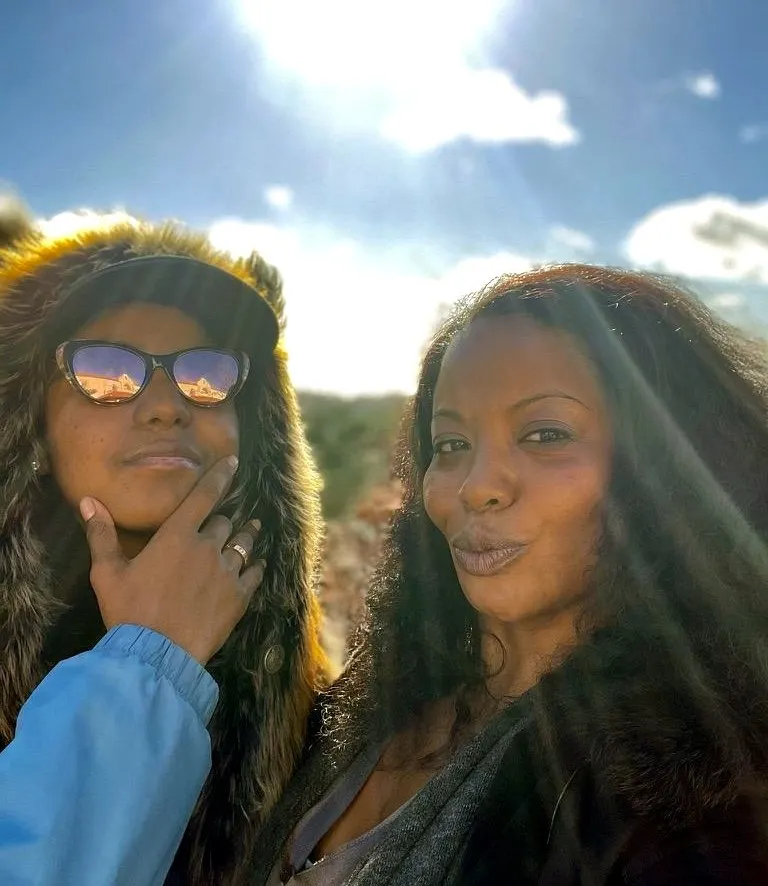
You are me and I am you.
If you take anything from this, take what our family learned the hard way. Pause, name the issue, and restore, the way Najya’s family did. Co-create with your child instead of deciding for them. And keep your children’s writing. It is testimony. One day it may be all the voice they have.
Many of these memories I had intentionally compartmentalized away. Bringing them back has been tough. With the memoir writing, I have brought back my grief therapist, and for the last month I have been waking up daily at 6 a.m. for my 40-Day Kundalini Sadhana, part of the Mystic Mind advanced yoga teacher training I just completed. That is what grounds me now. I did not have the practice then, but I know now it is what I needed, then and now: prayer time with God, the ancestors, especially Maia, and the god within me.